Address Stone Process Guide
A comprehensive architectural guide to selecting stone thickness, aligning layout courses, and completing a flawless flush install across all cladding types.
Thin Stone Veneer Installation
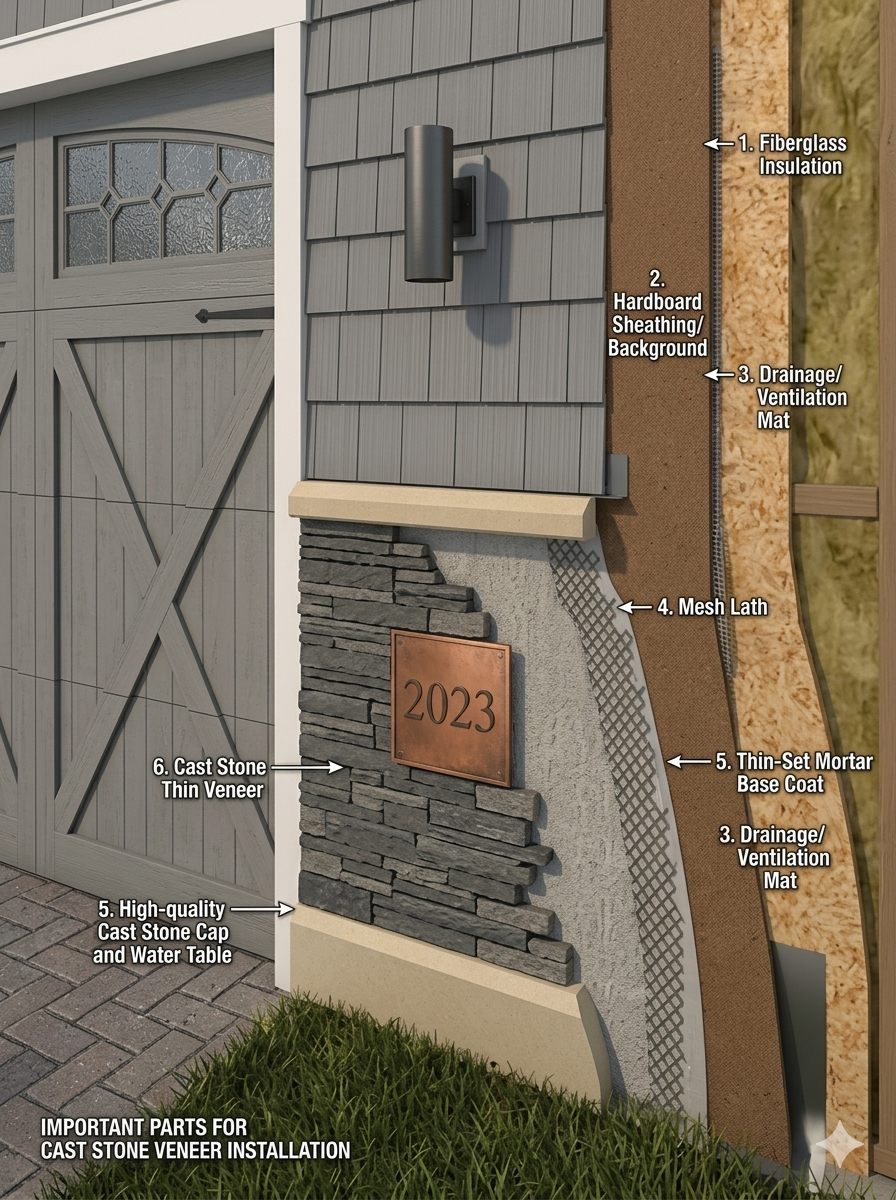
Thin stone veneer is widely favored in contemporary residential design for its striking architectural texture, efficiency, and lighter structural load. Our 1-1/2” thick address stones are meticulously engineered to align seamlessly with standard natural or manufactured thin stone veneers.
Installation Checklist
Layout Mapping
Measure and mark the exact target courses. Ensure the address stone lines up with horizontal mortar beds of the surrounding stone layout.
Mortaring & Embedding
Apply a premium latex-modified veneer mortar to both the backing wall and the back of the address stone. Treat it similar to the adjacent veneer flats.
Precision Leveling
Confirm horizontal alignment using a spirit level before the mortar sets. Adjust spacing dynamically with wooden shims if needed.
Joint Grouting
Fill the surrounding perimeter joint with grout bag mortar, and strike the joints once finger-print dry for a clean, integrated finish.
Key Benefit
Provides the prestigious look of solid stone masonry without the need for footings or heavy lintel supports. Fits flush with standard thin stone systems.
Thin Stone Veneer Installation
Critical Timing Recommendation
Masonry Synchronization
For new builds (such as brick veneers or stucco houses), it is crucial to purchase your Address Stone Direct plaque before the masons lay the surrounding courses.
When the stone is on-site at the beginning of the bricklaying phase, the masons can place the stone and match mortar heights seamlessly as they work upward. Ordering too late will require workers to leave an empty pocket, which often leads to complex brick cutting or misalignment.
Why Precision Cast Stone Matters
Address Stone Direct plaques are cast with ultra-durable aggregates under strict quality controls.
Dimensional Accuracy
Every plaque is cast with crisp edges and precise depths. No variations, ensuring masons face no surprises during installation.
Freeze-Thaw Resistance
Formulated to exceed standard ASTM specifications. Precast stone stands up to extreme winters, summer humidity, and rain for decades.
Pre-treated Surface
We cure and seal each stone in our dust-controlled facility, repelling moisture and preventing standard staining from surrounding wet mortar.